Introduction
Buying a refurbished phone, tablet, or laptop can be a smart way to save money without compromising on quality – but understanding refurbished grades is essential before making a purchase. Many buyers see terms like Like New, Excellent, Good, and Fair but aren’t always sure what they actually mean or whether they affect a device’s performance.
In reality, refurbished grades describe the cosmetic condition of a professionally refurbished device rather than its functionality. Knowing the difference between these grades helps you compare prices, set realistic expectations, and choose the best device for your budget. Whether you’re looking for a premium-looking smartphone or simply the best value for money, understanding the grading system can help you make a more informed buying decision.
In this complete UK buyer’s guide, we’ll explain what refurbished grades mean, how devices are graded, the differences between each grade, common myths, and expert tips to help you buy refurbished technology with confidence.
What Are Refurbished Grades?
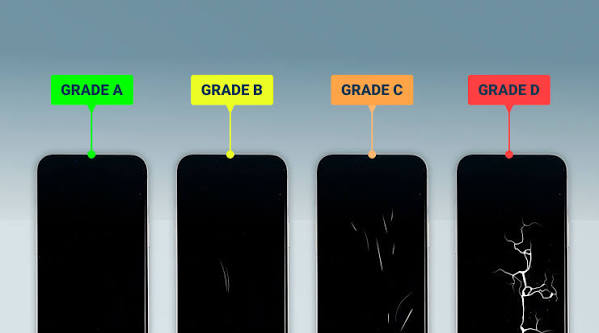
If you’ve ever compared two refurbished phones that look almost identical but have different prices, you’ve probably noticed they’re listed under different grades. That’s because refurbished grades describe a device’s cosmetic condition, helping buyers understand how much visible wear to expect before making a purchase.
A higher grade generally means the device has fewer signs of previous use, while a lower grade may show more noticeable cosmetic marks. What often surprises first-time buyers is that these grades don’t necessarily reflect how well the device works. Two phones in different cosmetic grades can offer the same everyday performance, with the main difference being their appearance.
Understanding this distinction can save you money. Some buyers prefer paying less for a device with a few minor scratches, while others are happy to spend a little more for one that looks almost new. Knowing what each grade represents makes it much easier to choose the right balance between price and appearance.
If you’re new to refurbished technology, it’s also worth understanding What Does Refurbished Mean? before comparing cosmetic grades. Refurbishment explains how a device is restored, while grading simply describes its visible condition after that process.
Quick Answer: What Do Refurbished Grades Mean?
Refurbished grades describe the cosmetic condition of a professionally refurbished phone, tablet, or laptop—not its performance. The most common grades are Like New, Excellent, Good, and Fair, with the main difference being the amount of visible cosmetic wear such as scratches or scuffs.
A professionally refurbished device should deliver the same reliable performance regardless of its cosmetic grade, provided it has been properly inspected, tested, and certified. Higher grades simply offer a cleaner appearance, while lower grades provide better value at a lower price. Understanding refurbished grades helps you choose the right balance between appearance, budget, and overall value before buying.
Although grading systems can vary slightly between retailers, they generally follow the same principle:
| Grade | What You Can Expect |
|---|---|
| Like New | Almost indistinguishable from a new device, with little or no visible wear. |
| Excellent | Very light signs of previous use that are difficult to notice during normal use. |
| Good | Minor scratches or small cosmetic marks that don’t affect functionality. |
| Fair | More noticeable signs of wear, such as visible scratches or scuffs, while remaining fully functional. |
The important thing to remember is that refurbished grades refer to appearance rather than performance. A Fair-grade device should still perform reliably if it has been professionally tested and refurbished. The difference is simply how much cosmetic wear you can expect to see.
Many buyers assume that a lower cosmetic grade also means lower quality, but that’s a common misconception. As explained in our guide Are Refurbished Phones Good?, reputable refurbishment focuses on functionality first, with cosmetic grading used only to describe the device’s external appearance.
Why Do Refurbished Devices Have Different Grades?
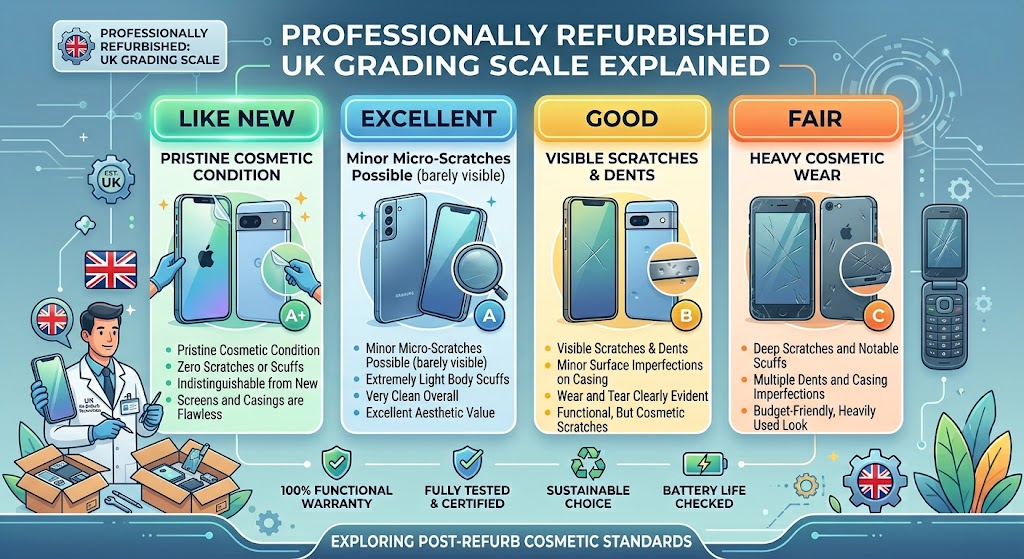
One of the biggest misconceptions about refurbished devices is that every product should look exactly the same once it has been restored. In reality, that’s rarely the case.
Every refurbished phone, tablet, or laptop starts with a different history. Some devices may have been returned shortly after purchase and show almost no signs of use, while others may have been used daily for several years before being refurbished. Although both can be restored to excellent working order, their cosmetic condition is often different.
That’s where refurbished grades come in.
Rather than leaving customers to guess what they’re buying, grading provides a simple way to describe the external condition of a device before it reaches its new owner. It sets clear expectations, helping buyers understand whether they’re paying for a device that looks almost untouched or one that has a few visible signs of previous use.
It’s important not to confuse refurbishment with grading. Refurbishment is the process of restoring a pre-owned device to full working condition through inspection, testing, cleaning, and quality checks. Grading, on the other hand, simply describes how the device looks after that process has been completed.
If you’re unfamiliar with refurbishment itself, our guide on What Does Refurbished Mean? explains how professionally restored devices differ from second-hand products and why they’re becoming an increasingly popular choice across the UK.
For many buyers, cosmetic condition is less important than reliability. A few small scratches may not matter if the device performs exactly as expected, which is why many people choose a lower cosmetic grade to save money without sacrificing everyday performance.
How Are Refurbished Devices Graded?
Although grading terminology can vary slightly between retailers, the assessment process follows a similar principle throughout the refurbished technology industry.
After a device has passed its technical inspections and quality checks, trained technicians evaluate its cosmetic condition. They carefully examine the exterior under good lighting, looking for visible signs of previous use such as scratches, scuffs, dents, or minor wear around frequently handled areas.
The inspection usually focuses on areas including:
- The front glass or display
- The rear housing
- Side frame and edges
- Camera housing
- Buttons and ports
- General cosmetic appearance
The amount, size, and visibility of these marks determine which cosmetic grade the device receives.
A device with virtually no visible wear may be classified as Like New or Excellent, while another with light scratches could fall into the Good category. Devices showing more noticeable cosmetic wear are often graded as Fair, provided they continue to meet the retailer’s functional standards.
The grading process isn’t about judging how well a device works – it’s about giving customers an honest description of its appearance.
1. Cosmetic Condition vs Performance
This is one of the most important distinctions to understand when buying refurbished technology. Many first-time buyers assume that a higher cosmetic grade automatically means better performance. In reality, cosmetic grading and technical performance are usually assessed separately.
For example, two refurbished iPhone 14 models may contain the same processor, offer identical storage, run the same version of iOS, and perform equally well in everyday use. The only noticeable difference could be that one has a couple of light marks on its frame, while the other looks almost brand new.
That’s why cosmetic grading shouldn’t be viewed as a measure of reliability.
Instead, it helps buyers decide whether paying more for a cleaner-looking device is worthwhile or whether they’d rather save money by accepting a few harmless cosmetic imperfections.
If reliability is your main concern, you’ll probably find our guide Are Refurbished Phones Good? useful. It explains the testing procedures, quality checks, and warranty protection that reputable refurbished retailers use before selling a device.
2. Why Cosmetic Grades Matter to Buyers
Refurbished grades aren’t just useful for retailers – they’re equally valuable for customers because they remove uncertainty from the buying process.
Without a grading system, every refurbished phone would simply be described as “used,” making it difficult to understand its condition before placing an order. Cosmetic grades provide a consistent way to compare products and choose the option that best matches your priorities.
For some people, appearance matters just as much as price. A business professional who regularly meets clients may prefer a device that looks almost new, while a student or someone buying a secondary phone may be perfectly happy with a few visible marks if it means spending less.
Neither choice is better than the other. The right refurbished grade depends entirely on your budget, expectations, and how much cosmetic wear you’re comfortable with.
That’s one of the reasons refurbished devices appeal to such a wide range of buyers. Instead of paying full retail price for a brand-new phone, you can choose the cosmetic condition that offers the best balance between cost and appearance.
3. Does Every Retailer Use the Same Refurbished Grades?
Not necessarily. While most refurbished retailers use similar grading systems, there isn’t a single industry-wide standard that every business follows.
For example, one retailer might classify a device as Excellent, while another may describe a very similar device as Grade A. Some businesses also include categories such as Like New, Very Good, or Pristine to provide more detailed cosmetic descriptions.
Although the names can differ, the principle remains largely the same – higher grades indicate fewer visible signs of previous use, while lower grades simply show more cosmetic wear.
For that reason, it’s always worth reading the retailer’s grading descriptions rather than relying on the grade name alone. Reputable sellers explain exactly what each condition means so customers know what to expect before buying.
At iExpert Market, devices are clearly described so buyers can compare cosmetic condition with confidence while knowing that every refurbished product has been professionally tested before sale.
Different Refurbished Grades Explained
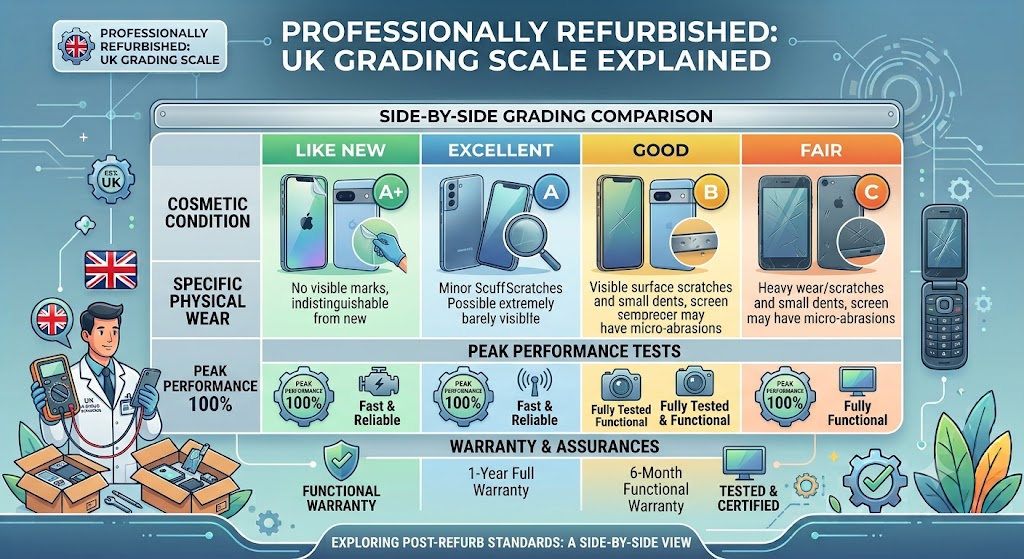
Now that you understand why refurbished devices are graded, the next step is knowing what each grade actually means in practice.
While the names may vary slightly between retailers, most refurbished devices fall into four common cosmetic categories: Like New, Excellent, Good, and Fair. Each grade reflects the device’s appearance rather than its technical performance.
For many buyers, choosing the right grade comes down to one simple question: Would you rather pay a little more for a device that looks almost new, or save money by accepting a few cosmetic imperfections? The answer depends on your priorities, budget, and how you plan to use the device.
1. Like New Grade
A Like New refurbished device is the closest you’ll get to the appearance of a brand-new product without paying the full retail price.
These devices show little to no visible signs of previous use. Any minor marks, if present at all, are extremely difficult to notice during normal everyday use. From a typical viewing distance, most people wouldn’t be able to tell that the device has had a previous owner.
Although Like New devices look exceptional, it’s important to remember that their internal testing process is the same as every other professionally refurbished device. The higher price reflects the outstanding cosmetic condition rather than superior performance.
What to Expect
- Virtually no visible scratches or scuffs
- Excellent-looking screen and housing
- Clean edges and frame
- Premium cosmetic appearance
- Fully tested and professionally refurbished
Best For
A Like New device is ideal if you:
- Want a phone that looks almost brand new
- Intend to give the device as a gift
- Prefer premium appearance over maximum savings
- Plan to keep the device for several years
For buyers looking at premium Apple models, a Like New condition is particularly popular when choosing from our Complete Guide to Choosing the Best Refurbished iPhone, where appearance often plays a bigger role in purchasing decisions.
2. Excellent Grade
Excellent is one of the most popular refurbished grades because it offers an excellent balance between appearance and value.
An Excellent graded device may have very light signs of previous use, but these are usually difficult to notice without looking closely. Small hairline marks or tiny cosmetic imperfections may be present, yet they don’t distract from the overall appearance of the device. Many customers find it difficult to distinguish an Excellent-grade phone from a brand-new one during everyday use.
What to Expect
- Very light cosmetic wear
- Minimal scratches or marks
- Well-maintained overall appearance
- Fully functional hardware
- Professionally inspected and tested
Best For
Excellent grade is a great choice if you:
- Want premium appearance without paying the highest price
- Upgrade your phone every few years
- Care about cosmetic condition
- Want strong value for money
This is often the preferred option for buyers browsing our range of Refurbished iPhones or Refurbished Samsung Phones, as it combines an attractive appearance with noticeable savings compared to buying new.
3. Good Grade
For many people, Good represents the sweet spot in the refurbished market.
A Good-grade device will show some visible signs of previous use, such as light scratches, small scuffs, or minor marks on the frame or rear housing. These cosmetic imperfections are usually only noticeable when you’re actively looking for them and don’t affect how the device performs.
Once a protective case and screen protector are fitted, many of these marks become difficult to notice in everyday use. Because of this, Good-grade devices often deliver some of the best value available.
What to Expect
- Light scratches or cosmetic marks
- Minor wear around the edges or back
- Fully tested functionality
- Reliable day-to-day performance
- Better overall value than higher cosmetic grades
Best For
Good grade is ideal if you:
- Want to maximise your budget
- Plan to use a protective case
- Care more about performance than appearance
- Want the best balance between price and cosmetic condition
Many experienced refurbished buyers deliberately choose Good-grade devices because they know cosmetic marks have little impact on everyday use.
If you’re comparing options across different brands, you’ll find similar grading choices throughout our collections of Refurbished Samsung Phones, Refurbished Tablets, and Refurbished MacBooks, making it easier to select a device that fits both your budget and expectations.
4. Fair Grade
A Fair graded device offers the lowest purchase price while remaining fully functional.
These devices show more obvious cosmetic wear than higher grades. You may notice visible scratches, scuffs, polished edges, or small signs of long-term use. Despite this, a professionally refurbished Fair-grade device should still operate reliably after completing the retailer’s testing process.
This is where many first-time buyers become confused. A Fair-grade device isn’t “poor quality” – it simply has more noticeable cosmetic wear. If appearance isn’t your top priority, it can offer outstanding value.
What to Expect
- Noticeable scratches or scuffs
- More visible cosmetic wear
- Fully working hardware
- Professionally tested before sale
- Lowest price among cosmetic grades
Best For
Fair grade is a sensible option if you:
- Want the lowest possible price
- Need a reliable secondary device
- Are buying a phone for children or teenagers
- Always use a protective case
- Prioritise performance over appearance
Many buyers are pleasantly surprised by how well a Fair-grade device performs. While it may show evidence of previous use, the everyday experience often remains very similar to higher cosmetic grades.
5. Refurbished Grade Comparison Table
| Refurbished Grade | What It Looks Like | How It Performs | Who It’s Best For | Overall Value |
|---|---|---|---|---|
| Like New | Looks almost identical to a brand-new device, with little or no visible signs of previous use. | Fully tested and performs just as expected for everyday use. | Buyers who want a premium-looking device or are purchasing a gift. | Premium appearance with smaller savings. |
| Excellent | May have a few very light marks, but they’re difficult to notice during normal use. | Delivers the same reliable performance as other professionally refurbished devices. | Anyone who wants a device that looks great while still saving money. | One of the most popular choices for balancing appearance and price. |
| Good | Shows light scratches or small cosmetic marks that don’t affect everyday use. | Fully functional and professionally tested before sale. | Buyers who care more about value than achieving a near-perfect finish. | Often considered the best value for money. |
| Fair | Has more noticeable signs of previous use, such as visible scratches or scuffs. | Performs reliably after passing the same functional checks as higher grades. | Budget-conscious buyers or anyone planning to use a protective case. | The lowest price, making it a practical choice for everyday use. |
Which Grade Offers the Best Value?
There isn’t a single “best” refurbished grade for everyone. Instead, the best choice depends on what matters most to you.
If appearance is your priority, Like New or Excellent are worth considering. If you’re mainly interested in saving money without compromising everyday performance, Good is often regarded as the best overall value.
Fair-grade devices can also be an excellent option, particularly if the phone will spend most of its life inside a protective case or you’re buying a dependable backup device. Rather than asking which grade is “best”, it’s more useful to ask:
How much is a cleaner-looking device worth to me?
For many buyers, that simple question makes the decision much easier.
Do Refurbished Grades Affect Performance?
This is one of the questions we hear most often, and the short answer is not necessarily. A common misconception is that a higher refurbished grade means better performance. In reality, refurbished grades are primarily used to describe a device’s cosmetic condition, not its technical capabilities.
For example, two refurbished iPhone 14 models might have the same processor, storage capacity, cameras, and software. One could be graded Excellent, while the other is listed as Good simply because it has a few more visible signs of previous use. In day-to-day use, both devices can deliver a very similar experience.
That’s why it’s important to look beyond the grade itself. A professionally refurbished device should have completed the retailer’s testing process before it’s offered for sale, regardless of whether it’s graded Excellent, Good, or Fair.
If you’re still unsure about the overall reliability of refurbished technology, our guide Are Refurbished Phones Good? takes a closer look at how refurbished devices are tested and why many buyers now choose them over buying used.
Do Refurbished Grades Affect Battery Health?
Battery health is another area that often causes confusion. Many buyers assume that a higher cosmetic grade automatically comes with a healthier battery. While that can sometimes be the case, cosmetic grading and battery performance aren’t the same thing.
A phone may look almost brand new on the outside while still requiring a battery check during refurbishment. Equally, a device with a few cosmetic marks could have an excellent battery after being professionally inspected.
That’s why reputable refurbished retailers assess battery performance separately from cosmetic appearance. When comparing refurbished devices, it’s always worth checking the retailer’s battery standards, warranty, and testing process rather than judging battery quality purely by the cosmetic grade.
At iExpert Market, every refurbished device undergoes professional testing before sale, helping ensure it meets functional standards rather than simply looking good on the outside.
Why Cosmetic Grades Can Save You Money
One of the biggest advantages of buying refurbished is that you can decide where your money goes.
If having a flawless-looking phone matters to you, paying a little extra for a Like New or Excellent grade may be worthwhile. However, if you’re more interested in getting reliable performance at the lowest possible price, a Good or Fair grade can often represent much better value.
Think about how you normally use your device. If you immediately fit a protective case and screen protector, small cosmetic marks quickly become much less noticeable. In those situations, paying significantly more for a higher cosmetic grade may not always make sense.
Many experienced refurbished buyers deliberately choose Good-grade devices because they know that a few light scratches rarely affect everyday use. Instead of paying for a perfect finish, they invest in the same performance while keeping more money in their pocket.
Common Myths About Refurbished Grades
Understanding how refurbished grades work also means separating facts from common misconceptions.
Myth 1: A Fair-grade device won’t work properly.
This is probably the biggest misunderstanding.
A Fair-grade device may show more visible wear, but if it has been professionally refurbished, it should still be fully functional. The grade reflects appearance, not whether the phone can make calls, browse the internet, or run apps.
Myth 2: Like New devices are completely unused.
Not always.
A Like New device may have had a previous owner but has been refurbished to an exceptionally high cosmetic standard. It looks almost new, but that doesn’t necessarily mean it has never been used.
Myth 3: Higher grades always have better batteries.
Battery health and cosmetic grading are usually assessed separately.
A cleaner-looking device doesn’t automatically have a newer or stronger battery. That’s why it’s important to buy from retailers that clearly explain their testing standards and warranty.
Myth 4: Refurbished grades are the same everywhere.
Not necessarily.
Different retailers may use different names or slightly different grading criteria. One business might describe a device as Excellent, while another may call a similar device Grade A or Very Good. For that reason, always read the grading descriptions rather than relying on the name alone.
Expert Tips for Choosing the Right Refurbished Grade
If you’re still deciding which refurbished grade to choose, these practical tips can help you get the best value for your budget.
- Decide whether appearance or price matters more. If you’ll be using a protective case from day one, paying extra for a near-perfect finish may not be necessary.
- Read the retailer’s grading guide carefully. Grade names can vary, so always check what each cosmetic condition actually includes.
- Look beyond the grade. A warranty, professional testing, and a trusted retailer are often more important than choosing the highest cosmetic grade.
- Think about how you’ll use the device. A business phone, gift, or personal daily driver may justify a higher cosmetic grade, while a backup phone or student’s device could offer better value in Good or Fair condition.
- Buy from a reputable refurbished retailer. Clear grading, transparent product descriptions, and reliable after-sales support provide much greater confidence than buying privately.
Whether you’re considering one of our Refurbished iPhones, Refurbished Samsung Phones, Refurbished Tablets, or Refurbished MacBooks, understanding the grading system makes it much easier to choose a device that matches both your expectations and your budget.
FAQs About Refurbished Grades
1. What are refurbished grades in simple words?
Refurbished grades describe the cosmetic condition of a device after it has been professionally refurbished. They tell you how the phone, tablet, or laptop looks externally, not how it performs internally.
2. Do refurbished grades affect performance?
No, refurbished grades do not affect performance. A Good or Fair grade device can work just as well as a Like New device because all products go through the same testing and refurbishment process.
3. What is the best refurbished grade to buy?
The best grade depends on your needs. Like New and Excellent are ideal for premium appearance, while Good offers the best balance of value and condition. Fair is best for budget-focused buyers.
4. Is a Fair-grade refurbished phone still good?
Yes, a Fair-grade phone is still fully functional. It may show visible cosmetic wear, but it should pass the same technical checks as higher grades and work reliably in everyday use.
5. What is the difference between Like New and Excellent grade?
Like New devices look almost brand new with little to no visible wear, while Excellent devices may have very light marks that are barely noticeable during normal use.
6. Why do refurbished devices have different grades?
Different grades exist because refurbished devices come with varying levels of cosmetic wear. Grading helps buyers understand the condition before purchasing and compare devices fairly.
7. Are refurbished grades the same across all retailers?
No, grading systems can vary. Some retailers use terms like Grade A, B, or C, while others use Like New, Excellent, Good, and Fair. Always check the retailer’s grading description.
8. Does a higher grade mean better battery life?
Not necessarily. Battery health is checked separately during refurbishment. A lower-grade device can sometimes have the same or even better battery performance than a higher-grade one.
9. Is it safe to buy Good-grade refurbished phones?
Yes, Good-grade phones are safe to buy if purchased from a trusted retailer. They are fully tested and functional, with only minor cosmetic imperfections.
10. What does Excellent refurbished grade mean?
Excellent grade means the device is in very good cosmetic condition with only minimal signs of use. It offers a near-premium appearance at a lower price than Like New.
11. Which refurbished grade is best for students?
Good or Fair grades are often best for students because they offer strong performance at a lower price, making them budget-friendly without sacrificing functionality.
12. Can refurbished phones look brand new?
Yes, Like New grade devices are designed to look almost identical to brand-new phones, with little or no visible signs of previous use.
13. Do refurbished grades include warranty?
Yes, most reputable refurbished retailers offer warranty coverage regardless of grade. Warranty covers functionality, not cosmetic condition.
14. Why is a Good-grade phone cheaper than Like New?
A Good-grade phone has more visible cosmetic marks, so it is priced lower. However, performance remains the same as higher-grade devices.
15. What should I check before choosing a refurbished grade?
You should consider your budget, how important appearance is to you, battery expectations, and whether you plan to use a protective case.
16. Are refurbished grades important for resale value?
Yes, higher cosmetic grades usually have better resale value because they look closer to new condition, even though performance is the same.
17. Can two phones with different grades perform the same?
Yes, two phones with different grades can have identical performance if they have been refurbished to the same technical standard.
18. What is the most popular refurbished grade?
Excellent and Good are the most popular because they offer a strong balance between price and cosmetic condition.
19. Do refurbished tablets and laptops use the same grading system?
Yes, most tablets and laptops follow similar grading systems such as Like New, Excellent, Good, and Fair to describe cosmetic condition.
20. Is it worth buying the lowest refurbished grade?
It depends on your needs. If appearance is not important and you want maximum savings, Fair grade can offer excellent value while still being fully functional.
Conclusion
Refurbished grades play an important role in helping buyers understand the cosmetic condition of a device after professional refurbishment. These grades are used to clearly describe how a phone, tablet, or laptop looks externally, while the internal components are already tested, repaired (if needed), and verified for full functionality.
From an SEO perspective, understanding refurbished grades such as Like New, Excellent, Good, and Fair is essential for anyone searching for affordable and reliable devices. These terms are widely used in the refurbished electronics market and help users quickly compare condition vs price before making a purchase.
In most cases, buyers confuse cosmetic grading with performance, but it is important to note that grading does not affect speed, battery performance, or overall functionality. Instead, it only reflects visible wear such as scratches, marks, or signs of previous use.
A clear understanding of these grades allows users to make smarter buying decisions, avoid overpaying for appearance alone, and choose devices that match both their budget and usage needs. This also improves trust and transparency in the refurbished market, which is a key factor for long-term customer satisfaction and SEO relevance in informational content.
Overall, refurbished grading systems exist to simplify the buying process, build trust, and ensure that customers can confidently select devices based on condition, value, and personal preference – not just appearance.
Why People Choose iExpert Market
Many buyers prefer iExpert Market because it focuses on one key thing that matters most in refurbished devices – trust and transparency. Instead of confusing customers with unclear grading or hidden conditions, it provides a clear and honest breakdown of every device so buyers know exactly what they are getting.
One of the biggest reasons people choose iExpert Market is its strict testing and quality control process. Every device is carefully inspected, tested, and refurbished before being listed, which helps ensure consistent performance across all grades.
Another major factor is clear grading descriptions. Whether a device is Like New or Fair, customers can easily understand the cosmetic condition without guessing or worrying about hidden issues. This builds confidence, especially for first-time refurbished buyers.
Customers also value the balance between price and quality. iExpert Market allows users to choose based on their budget, whether they want a premium-looking device or a more affordable option with full functionality.
Most importantly, it focuses on reliability, warranty support, and customer satisfaction, which makes it a trusted choice for people who want savings without compromising performance.
In simple words, people choose iExpert Market because it offers honest grading, tested devices, and reliable value for money in the refurbished electronics market.
Back to posts