Quick Answer
Although the terms are often used interchangeably, refurbished phones and second-hand phones are not the same.
A second-hand phone is typically sold by its previous owner in its existing condition, with little or no professional testing, repairs, or warranty. A refurbished phone, however, has been professionally inspected, securely data-wiped, tested, repaired where necessary, cleaned, graded, and certified before being resold.
For most UK buyers, a certified refurbished phone offers greater reliability, better quality assurance, warranty protection, and improved long-term value. While it may cost slightly more than buying directly from a private seller, the added peace of mind and reduced risk often make it the smarter investment.
In this guide, we’ll explain every important difference, compare both options side by side, highlight the risks buyers often overlook, and help you decide which option is right for your needs and budget.
Introduction
Buying a smartphone today is no longer as straightforward as choosing between the latest iPhone or Samsung Galaxy model. With the cost of brand-new devices continuing to rise, more people across the UK are exploring affordable alternatives that deliver the same great performance without the premium price tag.
That’s one of the main reasons refurbished and second-hand phones have become increasingly popular.
A refurbished iPhone can cost hundreds of pounds less than buying new, while a second-hand Samsung Galaxy might seem like an incredible bargain when browsing online marketplaces. At first glance, both options appear to offer excellent value—but they don’t necessarily offer the same buying experience.
This is where many buyers become confused. The words “refurbished” and “second-hand” are often used interchangeably in online listings, advertisements, and even by some retailers. In reality, they describe two very different types of devices.
One has usually been professionally inspected, tested, restored, and certified before being sold again. The other is generally sold in whatever condition it was last used, with its quality depending entirely on the previous owner. Understanding that difference is essential.
Choosing the wrong option could leave you dealing with poor battery health, hidden faults, unexpected repair costs, or a phone that simply doesn’t perform as expected. On the other hand, choosing a professionally refurbished device from a trusted retailer can provide many of the benefits of buying new while saving a significant amount of money.
At iExpert Market, we’ve helped thousands of customers across the UK purchase professionally refurbished iPhones, Samsung phones, iPads, MacBooks, tablets, and laptops. Every device undergoes a rigorous refurbishment process, extensive testing, secure data erasure, and quality checks before being certified for resale. Each eligible device is also backed by a 12-month warranty, giving customers extra confidence long after their purchase.
Whether you’re upgrading your current phone, buying a device for work or study, replacing a damaged handset, or simply looking for the best value, understanding the difference between refurbished and second-hand phones will help you make a more informed decision.
This guide explains everything you need to know – from how refurbished devices are restored and tested to the advantages, disadvantages, costs, warranties, and long-term reliability of each option. We’ll also share practical buying advice to help you avoid common mistakes and choose a device you can rely on.
What Is a Refurbished Phone?
A refurbished phone is a pre-owned device that has been professionally inspected, tested, repaired where necessary, cleaned, and certified before being sold again. Unlike a typical used phone, a refurbished device goes through a structured quality-control process designed to restore it to excellent working condition.
Many refurbished phones are customer returns, trade-ins, business upgrades, or ex-display devices. In many cases, there’s nothing seriously wrong with them – they may simply have been exchanged for a newer model or returned within a retailer’s return period. Others may have required minor repairs, such as a battery replacement or screen replacement, before being restored for resale.
At trusted retailers like iExpert Market, refurbishment is much more than simply cleaning a phone and putting it back on sale. Every eligible device is carefully inspected by experienced technicians to ensure it meets strict standards for functionality, reliability, and performance.
Although the exact process varies depending on the device and its condition, professional refurbishment generally includes:
- Comprehensive hardware diagnostics.
- Battery health testing.
- Screen and touchscreen inspection.
- Camera testing.
- Speaker and microphone checks.
- Charging port testing.
- Button functionality checks.
- Wi-Fi, Bluetooth, GPS, and mobile network testing.
- Secure data erasure.
- Software restoration.
- Cosmetic grading.
- Final quality inspection before certification.
Any faulty components identified during testing are repaired or replaced before the device is approved for resale. Once the refurbishment process is complete, the phone is professionally cleaned, securely reset, and prepared for its next owner.
This process gives buyers far greater confidence than purchasing a phone that has simply been listed online by a private seller.
If you’re new to refurbished technology, our guide “What Does Refurbished Mean?” explains the refurbishment process in even greater detail and what you should expect before making a purchase.
What Is a Second-Hand Phone?
A second-hand phone, sometimes called a used phone, is simply a device that has previously been owned by someone else and is being sold in its current condition.
Unlike refurbished phones, second-hand devices are usually not professionally inspected, repaired, or certified before being sold. They are commonly advertised through private sellers, online marketplaces, auction websites, local classified ads, or social media platforms. The condition of a second-hand phone depends entirely on how well the previous owner looked after it.
Some devices may have been carefully maintained and work perfectly, while others could have hidden faults that aren’t immediately obvious during a quick inspection.
For example, a second-hand phone may have:
- Reduced battery health.
- Minor or major cosmetic damage.
- Internal hardware faults.
- Previous third-party repairs.
- Water damage that isn’t immediately visible.
- Software issues.
- Activation or account locks.
- Missing accessories.
- No remaining manufacturer warranty.
In many cases, buyers only discover these problems after completing the purchase.
Because private sales are usually completed “as seen,” buyers often have little or no protection if something goes wrong. Unlike certified refurbished devices, second-hand phones are rarely supplied with warranties, professional testing reports, or return policies.
While buying second-hand can sometimes result in significant savings, it also carries a much higher level of risk.
Refurbished vs Second-Hand Phones: What’s the Main Difference?
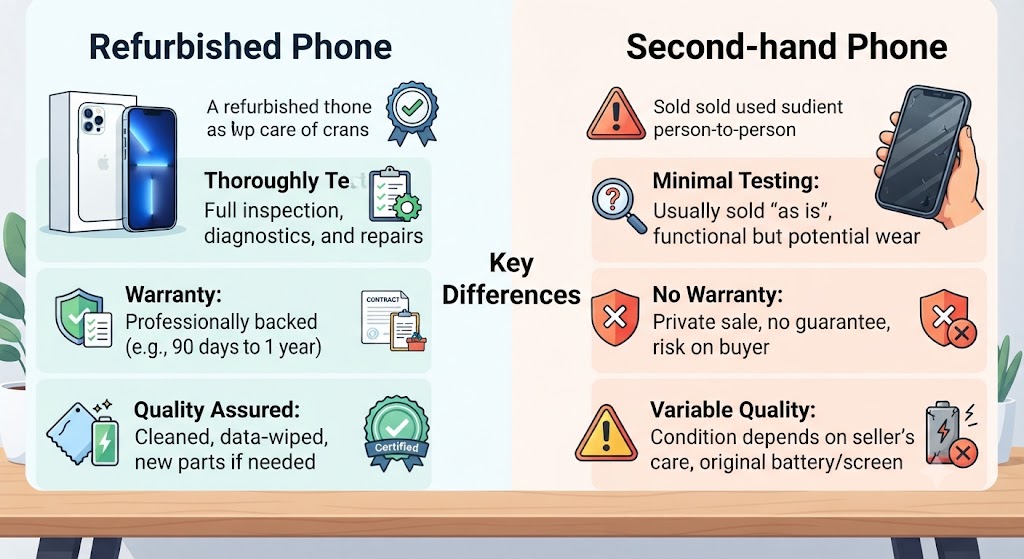
Although both refurbished and second-hand phones have been previously owned, the similarity largely ends there. The biggest difference is what happens before the phone is sold again.
A second-hand phone is usually passed directly from one owner to another with minimal preparation. A refurbished phone, on the other hand, has been professionally restored, tested, and certified to ensure it meets strict quality standards before reaching its next owner.
This additional inspection and refurbishment process significantly reduces the likelihood of hidden faults and gives buyers much greater peace of mind. Here’s a simple comparison:
| Feature | Certified Refurbished Phone | Second-Hand Phone |
|---|---|---|
| Condition before sale | Professionally inspected, tested, and restored if needed | Sold in its existing condition by the previous owner |
| Testing | Thoroughly tested to ensure everything works properly | Testing depends on the seller and is often limited or not carried out |
| Repairs | Faulty parts are repaired or replaced before sale | Usually sold without any repairs |
| Battery | Battery health is checked during refurbishment | Battery condition is often unknown |
| Data security | Previous owner’s data is securely erased | Data may not always be professionally wiped |
| Quality checks | Goes through multiple quality-control inspections | No formal quality inspection in most cases |
| Cosmetic condition | Clearly graded (e.g. Excellent, Very Good, Good) | Appearance varies and depends on the seller’s description |
| Warranty | Usually includes a warranty for added peace of mind | Rarely comes with a warranty |
| Returns | Most trusted retailers offer a return policy | Returns are often limited or unavailable in private sales |
| Buying risk | Lower risk thanks to professional refurbishment and support | Higher risk as the device is sold largely “as is” |
| Long-term value | More reliable and backed by after-sales support | Can be cheaper upfront but may lead to unexpected repair costs |
Although refurbished phones sometimes cost slightly more than second-hand devices, you’re paying for much more than the phone itself. You’re investing in professional testing, verified functionality, warranty protection, and greater confidence that the device will perform as expected.
For many buyers, that added reassurance easily outweighs the small difference in price.
Why the Difference Matters More Than You Think?
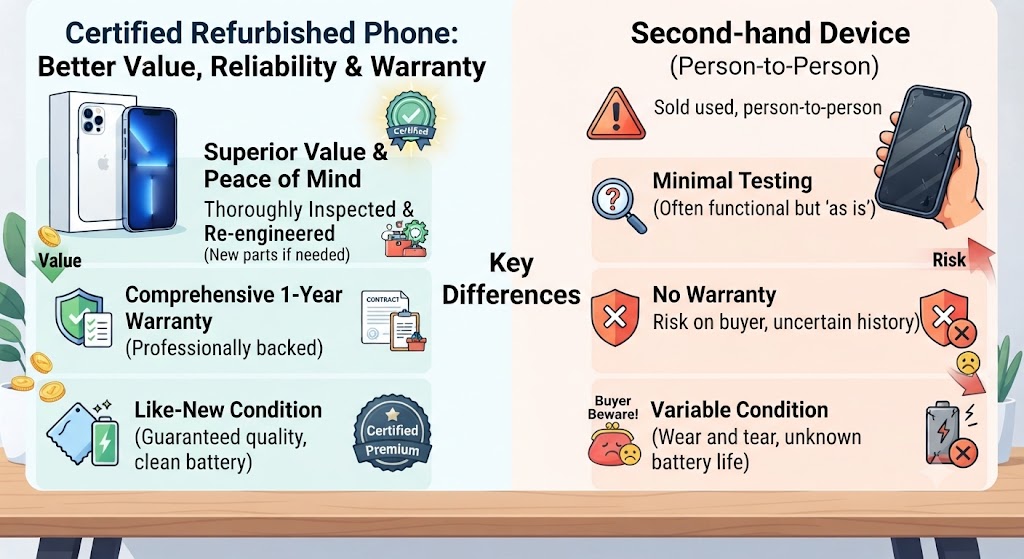
Many people compare prices without comparing what they’re actually getting. For example, imagine you find two identical iPhone models online.
One costs £320 from a private seller. The other costs £359 from a trusted refurbishment specialist. At first glance, the cheaper option may seem like the obvious choice.
However, the refurbished phone may include:
- Professional diagnostic testing.
- Battery health verification.
- Certified functionality.
- Secure data wiping.
- Warranty protection.
- Return policy.
- Expert customer support.
- Thorough quality inspection.
The second-hand phone may include none of these.
If the cheaper device develops a fault just a few weeks later, you could end up paying significantly more for repairs than you originally saved. That’s why looking beyond the purchase price is so important.
The true value of a phone isn’t determined solely by how much it costs today – it’s determined by how reliably it performs over the months and years ahead.
How Does the Refurbishment Process Work?
One of the biggest advantages of buying a refurbished phone is that it doesn’t simply change owners—it goes through a structured refurbishment process designed to restore its performance, reliability, and overall quality.
While the exact process can vary between retailers, trusted refurbishment specialists follow strict procedures to ensure every device meets high standards before it’s offered for sale.
At iExpert Market, every eligible device is professionally assessed by experienced technicians before reaching a customer. Rather than relying on a quick visual inspection, each phone undergoes a series of detailed checks to identify any faults that could affect its performance or lifespan.
A typical refurbishment process includes the following stages:
1. Initial Inspection
The process begins with a thorough inspection of the device. Technicians examine both the exterior and internal components to identify signs of wear, accidental damage, liquid exposure, or previous repairs.
This helps determine whether the phone is suitable for refurbishment and what work, if any, is required before it can be resold.
2. Comprehensive Diagnostic Testing
Next, the device is put through a range of diagnostic tests to ensure every major feature works correctly. These checks typically include:
- Display and touchscreen responsiveness
- Battery health and charging performance
- Cameras and flash
- Speakers and microphones
- Face ID or Touch ID (where applicable)
- Wi-Fi, Bluetooth, GPS, and mobile connectivity
- Charging port and physical buttons
- Sensors such as the proximity sensor and accelerometer
Any issues identified during testing are recorded for repair.
3. Repairs and Component Replacement
If a fault is found, the necessary repairs are carried out before the phone is approved for resale.
Depending on the condition of the device, this may involve replacing worn or damaged components such as the battery, screen, charging port, cameras, or other internal parts. The goal is to restore the phone to reliable working condition – not simply make it look good on the outside.
4. Secure Data Erasure
Protecting customer privacy is an essential part of the refurbishment process. Before a refurbished phone is resold, all data from the previous owner is permanently erased using secure data-wiping procedures. The device is then reset to its factory settings, ensuring it’s ready for its next owner.
This gives buyers confidence that they are receiving a clean device with no remaining personal information.
5. Cosmetic Grading
Once the phone is fully functional, it’s assessed for its cosmetic condition. Minor signs of previous use don’t affect performance, but they do influence how the device is graded.
Most trusted retailers classify refurbished phones into clear cosmetic grades, helping customers know exactly what to expect before buying.
6. Final Quality Check and Certification
Before a refurbished phone is listed for sale, it goes through one final inspection.
Technicians confirm that all repairs have been completed successfully, every feature is working correctly, and the device meets the retailer’s quality standards. Only after passing these final checks is the phone certified and prepared for sale.
At iExpert Market, every certified refurbished device is backed by a 12-month warranty, giving customers extra confidence that their purchase has been professionally restored and thoroughly tested.
Why This Process Matters
It’s easy to focus on price when comparing phones, but the refurbishment process is often what separates a great purchase from a costly mistake.
A professionally refurbished phone has been carefully inspected, tested, and restored to ensure it performs reliably in everyday use. By contrast, a second-hand phone may never have been checked for hidden issues, leaving the buyer to discover any problems after the purchase.
That’s why many people are happy to pay a little extra for a certified refurbished device. The additional testing, repairs, and quality checks provide reassurance that the phone has been prepared to a professional standard rather than simply passed from one owner to the next.
For anyone looking for a balance between affordability, reliability, and peace of mind, a certified refurbished phone is often the smarter long-term investment.
Advantages of Buying a Refurbished Phone
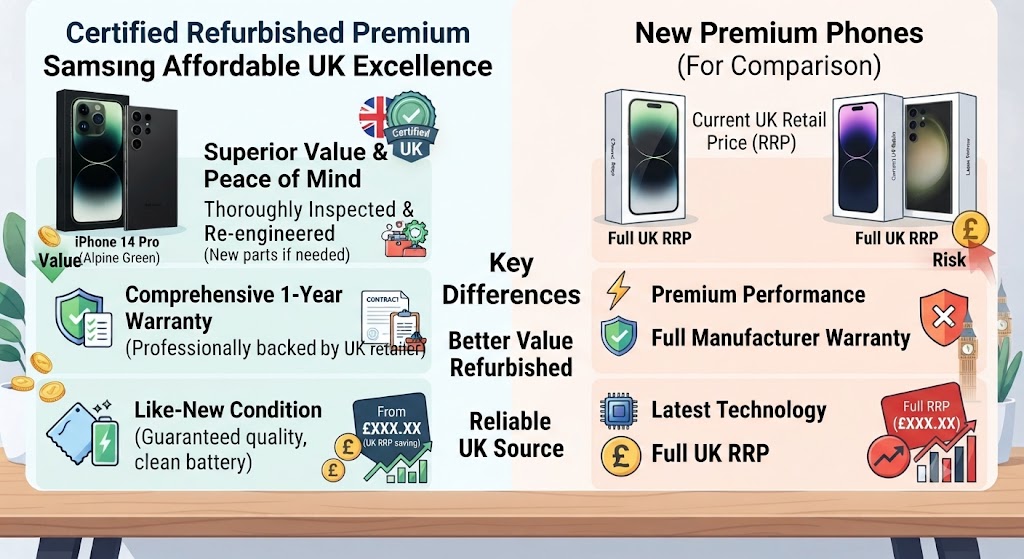
For many people, the biggest reason to choose a refurbished phone is the opportunity to save money. However, the benefits go far beyond the purchase price. A professionally refurbished device can offer the same everyday experience as a new phone while providing greater value, warranty protection, and a more sustainable way to upgrade your technology.
Here are some of the biggest advantages of buying a certified refurbished phone.
1. Significant Savings Compared to Buying New
One of the most obvious benefits is the price.
Refurbished phones typically cost considerably less than brand-new models, making premium devices much more affordable. Instead of stretching your budget for a new handset, you can often buy a higher-spec model with better cameras, faster performance, and more storage for a similar price.
Whether you’re considering a refurbished iPhone or a Samsung Galaxy device, choosing refurbished allows you to enjoy flagship technology without paying flagship prices.
2. Professionally Tested for Reliability
Unlike many second-hand phones, certified refurbished devices are carefully inspected and tested before they are sold.
Key components such as the display, battery, cameras, speakers, charging port, buttons, and wireless connectivity are checked to ensure the phone performs as expected. If any faults are found, they’re repaired before the device reaches the customer. This professional testing greatly reduces the risk of unexpected problems after purchase.
3. Warranty for Added Peace of Mind
A warranty is one of the biggest differences between refurbished and second-hand phones.
Most reputable refurbished retailers provide warranty cover, giving buyers confidence that they’ll be supported if a hardware issue arises after purchase. At iExpert Market, eligible refurbished devices are backed by a 12-month warranty, offering reassurance that your investment is protected.
4. Better Value in the Long Run
A second-hand phone may appear cheaper initially, but unexpected repairs can quickly increase the overall cost. Because refurbished devices have already been inspected, repaired where necessary, and tested for reliability, they’re often a better long-term investment.
Paying slightly more upfront can help you avoid expensive surprises later.
5. A More Sustainable Choice
Buying refurbished isn’t just good for your wallet – it’s also good for the environment. Extending the life of smartphones reduces electronic waste, lowers demand for new manufacturing, and helps conserve valuable raw materials used in modern technology.
Choosing refurbished is a practical way to reduce your environmental impact while still enjoying premium devices.
6. Access to Premium Devices at Lower Prices
Many people assume flagship smartphones are out of reach because of their original retail prices. Refurbished devices make premium technology much more accessible.
Instead of settling for a brand-new budget phone, you may be able to afford a refurbished flagship model that offers:
- Better cameras.
- Faster processors.
- Higher-quality displays.
- Longer software support.
- Improved overall performance.
For many buyers, this represents far better value for money.
7. Greater Buying Confidence
Buying from a trusted refurbishment specialist offers reassurance that private sales simply can’t match. You’re purchasing from a business that has professionally assessed the device, clearly described its cosmetic condition, and provides customer support if you need assistance after your purchase.
That additional confidence is one of the reasons certified refurbished phones continue to grow in popularity across the UK.
Are There Any Disadvantages to Buying a Refurbished Phone?
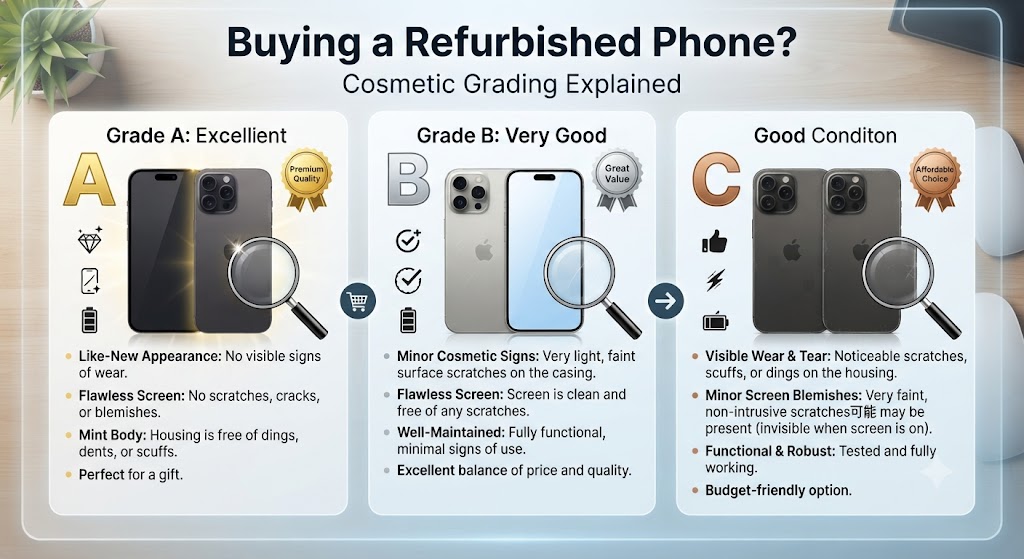
Although refurbished phones offer excellent value, it’s important to understand that they aren’t identical to buying a brand-new device.
Being aware of the potential limitations will help you make a more informed purchasing decision.
1. Cosmetic Signs of Previous Use
Even the highest cosmetic grades may show very minor signs of previous ownership, such as light surface marks or tiny scratches.
These cosmetic imperfections don’t affect performance, but buyers expecting a device that looks factory fresh should understand the difference before purchasing.
2. Original Accessories May Vary
Some refurbished phones are supplied with compatible charging accessories rather than the original manufacturer packaging or cables.
Trusted retailers clearly explain what’s included with each device, so there are no surprises when your order arrives.
3. Availability Depends on Stock
Unlike new phones, refurbished stock changes regularly. Certain colours, storage capacities, or models may only be available in limited quantities depending on trade-ins and available inventory.
If you’ve found the exact model you’re looking for, it’s often worth purchasing before stock changes.
4. Choosing the Right Retailer Matters
Not all refurbished phones are refurbished to the same standard. Some sellers carry out extensive testing and quality control, while others perform only basic checks before listing devices for sale.
For this reason, it’s important to buy from a retailer that clearly explains its refurbishment process, offers transparent grading, provides a warranty, and has a strong reputation for customer service.
Advantages of Buying a Second-Hand Phone
Despite the additional risks, buying second-hand can still be the right choice for some buyers. Here are a few reasons why people continue to choose second-hand devices.
- They often have the lowest upfront purchase price.
- Private sellers may offer room for negotiation.
- Older or discontinued models can sometimes be easier to find.
- Local purchases may allow buyers to inspect the device before handing over payment.
If you’re buying from someone you know personally and trust, a second-hand phone may represent good value. However, it’s still important to inspect the device carefully before completing the purchase.
The Risks of Buying a Second-Hand Phone
While second-hand phones can save money initially, they also carry risks that many buyers don’t consider until after the purchase. Common issues include:
- Unknown battery health.
- Hidden hardware faults.
- Previous water damage.
- Poor-quality third-party repairs.
- Activation locks or unpaid finance.
- No warranty or after-sales support.
- Limited or no return options.
- Unexpected repair costs shortly after purchase.
These risks don’t mean every second-hand phone is a bad purchase – but they do explain why many buyers prefer the additional protection offered by certified refurbished devices.
Expert Tip
If two phones are similar in price and one is professionally refurbished with a warranty while the other is a private second-hand sale, the refurbished device will usually offer better value, greater reliability, and much more peace of mind over the long term.
Who Should Buy a Refurbished Phone?
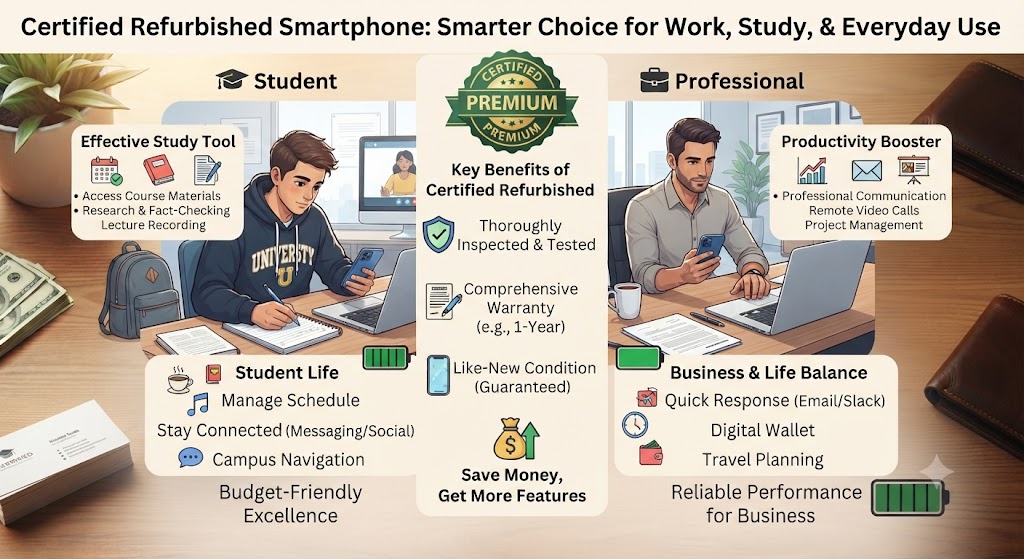
A refurbished phone isn’t just for people looking to spend less. It’s a practical option for anyone who wants a reliable device, good value for money, and extra peace of mind.
Here are some of the people who benefit most from buying certified refurbished devices.
1. Students
Students often need a dependable smartphone for studying, online classes, note-taking, video calls, and staying connected without spending a fortune. A refurbished phone allows them to enjoy premium features while keeping within a limited budget.
2. Professionals
For work, reliability matters.
Whether you’re managing emails, attending virtual meetings, using productivity apps, or travelling regularly, a professionally refurbished phone offers dependable performance without the high cost of buying new every time you upgrade.
3. Families
Parents buying phones for children or teenagers often prefer refurbished devices because they offer excellent value while reducing the financial impact if the device is accidentally damaged or lost.
4. Budget-Conscious Buyers
Not everyone wants – or needs – the latest smartphone.
If you’re looking for the best balance between performance and affordability, a refurbished phone can give you access to flagship features at a much lower price than buying new.
5. Environmentally Conscious Consumers
If reducing electronic waste is important to you, choosing refurbished is one of the simplest ways to make your technology purchases more sustainable.
Giving a high-quality device a second life helps reduce unnecessary manufacturing and keeps perfectly usable electronics out of landfill.
Who Might Prefer a Second-Hand Phone?
Although refurbished phones are the better choice for many buyers, there are situations where a second-hand phone may still make sense. For example, you might consider buying second-hand if:
- You’re working with a very limited budget.
- You’re buying from someone you know and trust.
- You can inspect and test the device before paying.
- You’re looking for an older model that’s no longer widely available.
- You’re comfortable accepting the risks of buying without a warranty.
Even then, it’s important to check the phone carefully before completing the purchase.
How to Choose Between a Refurbished and a Second-Hand Phone
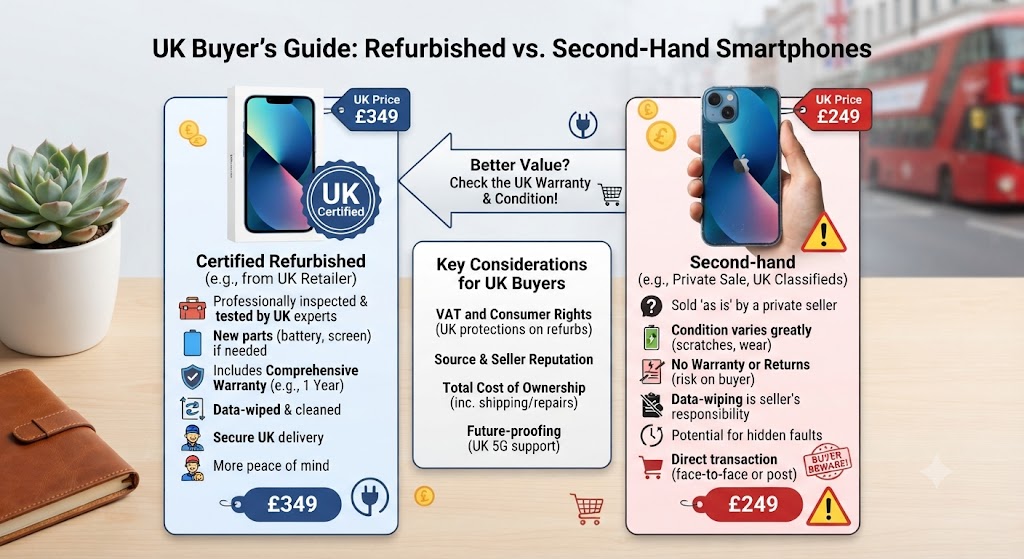
If you’re still unsure which option is right for you, ask yourself a few simple questions.
Do you want the lowest possible price?
A second-hand phone may cost less initially, but remember to consider the possibility of future repair costs if hidden faults appear.
Do you want greater peace of mind?
A certified refurbished phone is usually the safer option because it has been professionally tested, restored where necessary, and backed by a warranty.
Is long-term reliability important?
If you plan to keep your phone for several years, buying refurbished is often the smarter investment.
Do you value after-sales support?
Buying from a trusted refurbishment specialist means you’ll usually have access to customer support, warranty cover, and a returns policy if needed.
For most buyers, these benefits outweigh the small difference in purchase price.
Common Myths About Refurbished Phones
Despite becoming increasingly popular, there are still several misconceptions about refurbished devices. Let’s separate fact from fiction.
Myth 1: Refurbished Phones Are Just Used Phones
Not exactly.
While refurbished phones have been previously owned, they are professionally inspected, tested, repaired where necessary, and certified before being sold again. A standard second-hand phone usually doesn’t go through this process.
Myth 2: Refurbished Phones Don’t Last Long
A professionally refurbished phone can last for many years when properly cared for.
Its lifespan depends far more on the model, usage, and maintenance than on whether it’s refurbished or brand new.
Myth 3: Refurbished Phones Are Poor Quality
This is one of the biggest misconceptions.
Certified refurbished devices are carefully tested to ensure they meet strict performance standards. In many cases, they offer an experience that’s almost indistinguishable from buying new.
Myth 4: Refurbished Means Damaged
Not necessarily.
Many refurbished phones were never faulty in the first place. Some are customer returns, trade-ins, or devices replaced during upgrades. Others only required minor repairs before being professionally restored.
Myth 5: You Don’t Get a Warranty
This depends on where you buy. Reputable refurbishment specialists usually include a warranty, giving buyers additional confidence after their purchase.
Final Verdict: Refurbished vs Second-Hand Phones
If your priority is simply finding the cheapest possible phone, a second-hand device may seem like the obvious choice.
However, the lower purchase price often comes with greater uncertainty. Hidden faults, poor battery health, previous repairs, and the lack of warranty or after-sales support can sometimes turn an apparent bargain into an expensive mistake. A certified refurbished phone offers a much more balanced option.
Although it may cost slightly more upfront, you’re benefiting from professional testing, secure data erasure, quality checks, repairs where required, cosmetic grading, warranty protection, and ongoing customer support. For most people, that extra reassurance makes refurbished phones the smarter long-term investment.
Whether you’re buying an iPhone, Samsung Galaxy, iPad, MacBook, tablet, or laptop, choosing a trusted refurbishment specialist helps ensure you receive a device that’s ready for everyday use from the moment it arrives.
Why Buy from iExpert Market?
At iExpert Market, we believe buying refurbished should feel just as safe and straightforward as buying new.
Every eligible device is professionally refurbished by experienced technicians, thoroughly tested, securely data-wiped, and carefully inspected before being offered for sale. We also provide transparent cosmetic grading, fast UK delivery, and a 12-month warranty, so you can shop with complete confidence.
Whether you’re looking for a refurbished iPhone, Samsung Galaxy, iPad, MacBook, tablet, or laptop, you’ll find premium technology at outstanding value – without compromising on quality or reliability.
Explore our latest collection and discover why thousands of customers across the UK choose iExpert Market for certified refurbished devices.
Refurbished vs Second-Hand Phones: FAQs
1. What is the difference between a refurbished and a second-hand phone?
The main difference is that a refurbished phone has been professionally inspected, tested, repaired where necessary, and certified before being sold. A second-hand phone is usually sold by its previous owner in its existing condition without professional refurbishment or warranty.
2. Are refurbished phones worth buying in the UK?
Yes. Certified refurbished phones offer excellent value for money, allowing you to buy premium devices at a lower price while benefiting from professional testing, quality checks, and warranty protection.
3. Are refurbished phones better than second-hand phones?
For most buyers, yes. Refurbished phones offer greater reliability, warranty cover, and professional quality assurance, making them a safer choice than most second-hand devices.
4. Do refurbished phones come with a warranty?
Most reputable refurbished retailers provide a warranty. At iExpert Market, eligible refurbished devices include a 12-month warranty for added peace of mind.
5. Can refurbished phones have scratches?
Yes. Depending on their cosmetic grade, refurbished phones may show minor signs of previous use, but these cosmetic marks don’t affect performance.
6. How long does a refurbished phone last?
With proper care, a professionally refurbished phone can last for many years, offering performance that’s comparable to a new device.
7. Is it safe to buy a second-hand phone?
It can be, but it carries more risk. Always check the phone’s condition, battery health, activation status, and seller reputation before purchasing.
8. Why are refurbished phones more expensive than second-hand phones?
The slightly higher price reflects professional testing, repairs, secure data wiping, cosmetic grading, warranty protection, and quality assurance.
9. Are refurbished iPhones original Apple devices?
Yes. A refurbished iPhone is still an original Apple device that has been professionally restored before being resold.
10. Are refurbished Samsung phones reliable?
Yes. Professionally refurbished Samsung phones are thoroughly tested to ensure they perform reliably for everyday use.
11. Can I use any network with a refurbished phone?
Most refurbished phones sold by trusted UK retailers are SIM-free and unlocked, allowing you to use them with major UK mobile networks.
12. Is buying a refurbished phone better than buying a cheap new phone?
In many cases, yes. A refurbished flagship phone often provides better performance, cameras, and build quality than a brand-new budget device.
13. What should I check before buying a refurbished phone?
Check the cosmetic grade, warranty, return policy, battery condition, storage capacity, and the retailer’s reputation before making your purchase.
14. What should I check before buying a second-hand phone?
Inspect the phone for physical damage, test all major features, verify that it’s not activation locked, and ask about its repair history if possible.
15. Are refurbished phones environmentally friendly?
Yes. Buying refurbished extends the life of electronic devices, helping reduce e-waste and lowering the environmental impact of manufacturing new smartphones.
16. Can refurbished phones receive software updates?
Yes. Refurbished phones receive software updates just like new devices, provided the manufacturer still supports that model.
17. Can I trade in my old phone when buying a refurbished device?
Many retailers offer trade-in programmes, allowing you to reduce the cost of your next refurbished phone by exchanging your current device.
18. Which is better: a refurbished iPhone or a refurbished Samsung phone?
Both offer excellent value. The best choice depends on your preferred operating system, budget, and the features that matter most to you.
19. Where is the best place to buy refurbished phones in the UK?
Buying from a trusted refurbishment specialist like iExpert Market helps ensure your device has been professionally tested, certified, and backed by a warranty.
20. Should I buy a refurbished or second-hand phone?
If you want greater reliability, warranty protection, and long-term value, a certified refurbished phone is usually the better choice. If your priority is the lowest possible upfront cost and you’re comfortable accepting more risk, a second-hand phone may be suitable.
Final Thoughts
Choosing between a refurbished phone and a second-hand phone ultimately comes down to value, reliability, and peace of mind.
If you’re simply looking for the lowest possible price and don’t mind taking a few risks, a second-hand phone may suit your needs. However, it’s important to remember that private sales often come without professional testing, warranty protection, or a clear understanding of the device’s history.
A certified refurbished phone offers a much safer alternative. It has been professionally inspected, tested, cleaned, securely data-wiped, and, where necessary, repaired before being offered for sale. Combined with a warranty and return policy from a trusted retailer, refurbished devices provide excellent long-term value while helping to reduce electronic waste.
Whether you’re buying a refurbished iPhone, Samsung Galaxy phone, iPad, MacBook, tablet, or laptop, purchasing from a reputable refurbishment specialist gives you far greater confidence than buying from an unknown private seller.
If you’re still deciding, remember this simple rule:
- Choose a refurbished device if you want quality assurance, warranty protection, and dependable performance.
- Choose a second-hand device only if you’re comfortable accepting more uncertainty in exchange for the lowest possible price.
For most UK buyers, a certified refurbished device is the smarter investment because it strikes the right balance between affordability, reliability, and long-term performance.
Back to posts